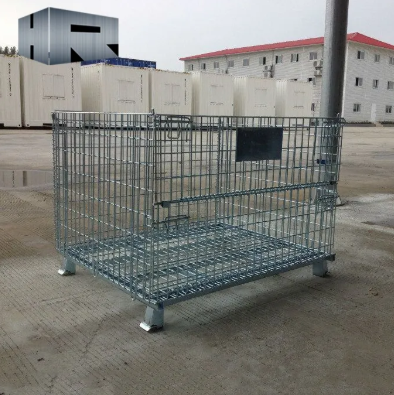
Mesh containers, characterized by their lattice-like structures and breathable design, have become indispensable tools across a diverse array of industries. Their versatility stems from attributes such as ventilation, lightweight construction, stackability, and ease of cleaning, making them ideal for applications ranging from logistics to healthcare. This article explores the widespread adoption of mesh containers in 12 key industries, highlighting their role in enhancing efficiency, safety, and sustainability.
1. Logistics and Transportation
Mesh containers are a staple in global supply chains due to their ability to optimize space and protect goods during transit. Their open-weave design ensures airflow, reducing moisture buildup and spoilage risks for perishable items like fruits, vegetables, and flowers. In automotive logistics, they securely transport automotive parts (e.g., engine components, tires) while allowing visual inventory checks. For e-commerce fulfillment centers, collapsible mesh containers streamline returns processing and warehouse organization, adapting to high-volume demands with minimal storage footprint.
2. Manufacturing and Assembly
In manufacturing sectors such as electronics, aerospace, and machinery, mesh containers facilitate lean production workflows. They are used to organize small parts (screws, connectors) on assembly lines, enabling quick access and reducing errors. Heavy-duty metal mesh containers withstand harsh industrial environments, safeguarding tools and components from dust and debris. In automotive plants, they support just-in-time (JIT) manufacturing by holding chassis parts or subassemblies during welding and painting processes.
3. Agriculture and Horticulture
Farmers rely on mesh containers for crop management and transportation. For example, mesh crates protect delicate produce (berries, leafy greens) during harvest and distribution, minimizing bruising while promoting airflow to prevent fungal growth. In greenhouse operations, stackable mesh containers house seedlings, ensuring proper ventilation and light exposure. Livestock farmers utilize durable mesh pens for transporting animals or storing feed, balancing durability with animal welfare considerations.
4. Retail and E-Commerce
Retailers leverage mesh containers for merchandise display and inventory management. Clothing boutiques use hanging mesh garment bags to showcase apparel while protecting items from dust. Supermarkets adopt stackable mesh bins for bulk produce or bakery items, enhancing shelf aesthetics and accessibility. In e-commerce fulfillment centers, transparent mesh containers aid in order picking and quality control, allowing workers to quickly identify items and reduce packing errors.
5. Healthcare and Pharmaceuticals
Medical facilities deploy mesh containers for sterile storage and waste management. Collapsible mesh bins safely transport linens or medical supplies between departments, while rigid mesh containers isolate contaminated materials during disposal. Pharmaceutical companies use mesh trays to organize pills or capsules during packaging, ensuring airflow to maintain product integrity. Cleanroom-compatible mesh containers prevent particle accumulation, meeting stringent hygiene standards.
6. Construction and Infrastructure
On construction sites, mesh containers store tools, safety gear, or building materials (bricks, tiles) in a secure yet accessible manner. Their lightweight design simplifies transportation between job sites, while UV-resistant coatings prolong durability under harsh outdoor conditions. In civil engineering projects, mesh containers transport aggregates or precast concrete components, balancing load-bearing capacity with ventilation to prevent moisture damage.
7. Food Processing and Packaging
Food processors rely on mesh containers for hygienic material handling. Stainless-steel mesh containers sanitize easily, making them ideal for transporting raw ingredients (meat, dairy) or finished products like baked goods. In wineries, mesh bins facilitate grape sorting and fermentation monitoring, ensuring proper airflow without compromising product quality. Snack food manufacturers use mesh drums to store nuts or chips, preventing crushing and promoting airflow to preserve freshness.
8. Sports and Recreation
Outdoor enthusiasts and sports facilities utilize mesh containers for gear storage and transport. Mesh duffel bags protect camping equipment from moisture, while collapsible mesh boxes keep golf clubs or bicycles organized during travel. Sports stadiums employ mesh containers to sort and transport equipment (jerseys, balls) between games, leveraging their durability and resistance to abrasion.
9. Energy and Utilities
In renewable energy sectors, mesh containers store solar panels or wind turbine components during installation. Their modular design accommodates irregularly shaped equipment, while corrosion-resistant coatings withstand outdoor exposure. Utility companies use mesh bins to organize tools and safety gear at power plants or substations, ensuring quick access and compliance with safety regulations.
10. Maritime and Shipping
Shipping industries adopt mesh containers for cargo securing and inventory management. On cargo ships, ventilated mesh containers prevent moisture buildup in textile or electronic shipments. Port facilities use heavy-duty mesh pallets to stack containers, enhancing airflow and reducing the risk of mold during long voyages. Cruise ships deploy mesh laundry bins for linen storage, balancing hygiene and space efficiency.
11. Education and Research Laboratories
Laboratories use mesh containers for specimen storage and chemical handling. Wire mesh trays organize test tubes or samples, allowing airflow to prevent contamination. Educational institutions employ stackable mesh bins for art supplies or sports equipment, promoting organization in shared spaces. Field research teams rely on rugged mesh containers to transport soil samples or geological specimens without damage.
12. Recycling and Waste Management
Mesh containers play a critical role in recycling operations. Transparent mesh bins facilitate sorting of recyclables (plastics, paper) at collection points, enabling easy identification and reducing contamination. Industrial shredders use mesh receptacles to collect shredded materials (e.g., electronics, tires), ensuring efficient material flow. Municipal waste facilities deploy heavy-duty mesh dumpsters for bulky items like furniture or appliances, balancing airflow with structural integrity.
Emerging Trends and Innovations
The versatility of mesh containers continues to expand through technological advancements:
Smart Mesh: IoT-enabled containers track inventory levels and environmental conditions (temperature, humidity).
Sustainable Materials: Biodegradable mesh made from recycled plastics or plant fibers reduces ecological footprints.
Modular Design: 3D-printed connectors allow customized configurations for specialized applications.
Conclusion
From agriculture to healthcare, mesh containers have evolved from simple storage solutions to multifunctional tools critical to operational efficiency. Their adaptability, cost-effectiveness, and sustainability make them a cornerstone of modern industry. As global demand for streamlined logistics and eco-friendly practices grows, mesh containers will undoubtedly remain a vital asset across sectors, driving innovation and resilience in an increasingly interconnected world.



 Téléphone
Commentaire
(0)